Management of POI
How is POI managed?
POI means the ovaries stop making normal levels of hormones, mainly oestrogen, years or even decades earlier than usual. Oestrogen does far more than control periods. It helps protect the bones, heart, brain, vagina and bladder, and it affects mood and energy.
Managing POI has two main aims:
Ease symptoms such as hot flushes, night sweats, vaginal dryness and low mood.
Protect your long-term health by replacing the hormones your body would normally make until around age 50.
The advice below follows the 2024 international POI guideline from the European Society of Human Reproduction and Embryology (ESHRE).
Hormone replacement therapy (HRT): the foundation of care
Who should take it? ESHRE recommends that all women with POI take hormone therapy until at least the average age of natural menopause, around 51, unless there’s a medical reason they can’t.
HRT in POI is different from HRT at the usual menopause. When you have POI, HRT replaces hormones your body should still be making. It isn’t adding extra hormones. This is why the worries you may have heard about HRT in older women generally don’t apply in the same way to women with POI. For example, studies have not shown a higher risk of breast cancer from HRT in women with POI compared with women of the same age whose ovaries work normally.
Oestrogen
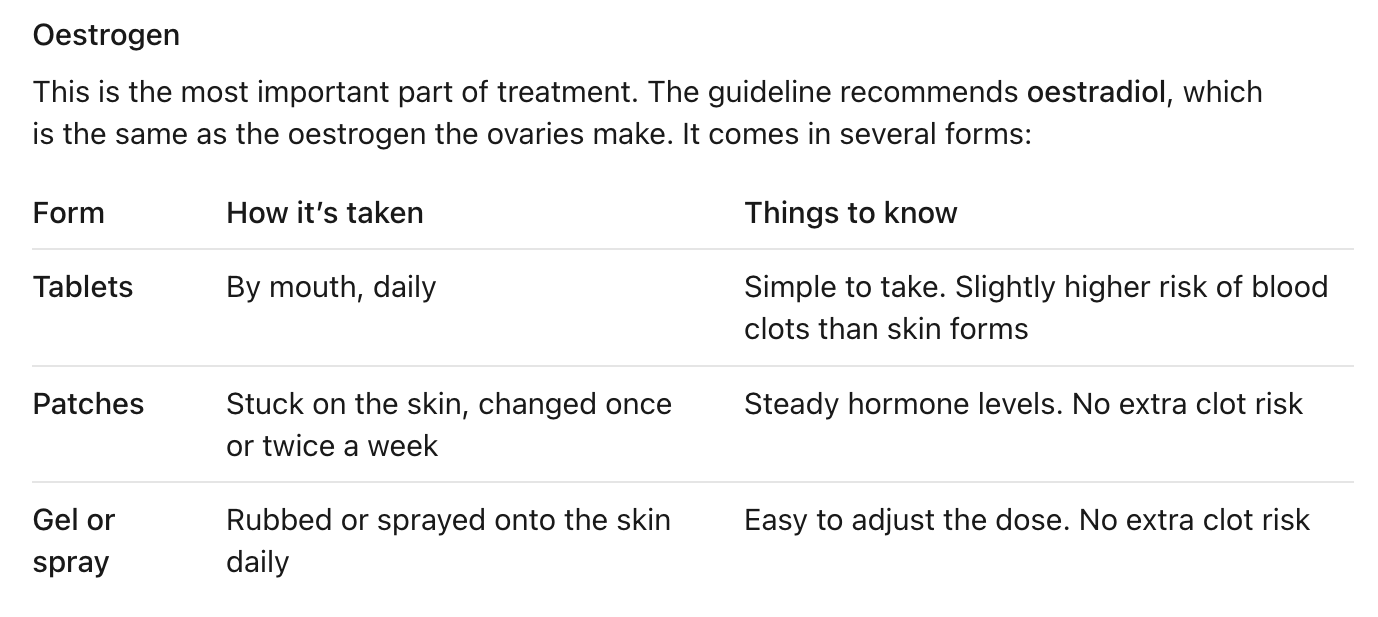
This is the most important part of treatment. The guideline recommends oestradiol, which is the same as the oestrogen the ovaries make. It comes in several forms:
Forms that go through the skin (transdermal) are often preferred, especially if you have migraines, a higher risk of blood clots or a higher body weight. There are pros and cons to every option, though, and the best choice is a personal decision you make with your doctor.
Women with POI often need higher doses than women going through menopause at the usual age, because they’re replacing a full level of hormones. Your dose should be adjusted until your symptoms are controlled.
Some women take the combined contraceptive pill instead of HRT. It’s a reasonable option, especially if you also need contraception. HRT may be better for bone health and blood pressure, though, so talk through the choice with your doctor.
Vaginal oestrogen comes as creams, pessaries or a ring placed in the vagina. It treats dryness and discomfort directly and can be used alongside your main HRT if needed.
Progestogen: protecting the womb
If you still have your womb, you also need a progestogen. Taking oestrogen on its own makes the lining of the womb thicken, and over time that raises the risk of womb (endometrial) cancer. A progestogen prevents this.
There are a few ways to take it:
Cyclical: a progestogen for at least 12 days each month. This usually brings on a monthly bleed.
Continuous: a progestogen every day. Usually there’s no bleeding once things settle.
Hormonal coil (Mirena): protects the womb for several years and works as contraception.
Common choices include micronised progesterone (Utrogestan), dydrogesterone and medroxyprogesterone acetate.
If you’ve had a hysterectomy, you usually need oestrogen only.
Testosterone
The ovaries also make some testosterone. ESHRE advises that testosterone may be considered for women with low sexual desire that’s causing distress, once oestrogen treatment is working well.
There’s growing interest in whether testosterone also helps mood, energy, concentration or bones, but there isn’t yet enough good evidence to recommend it for those reasons. In the UK, testosterone isn’t licensed for women, so doctors prescribe it “off-label” at a low dose and check your blood levels regularly.
What are the benefits of HRT?
Relieves symptoms: hot flushes, night sweats, vaginal dryness, poor sleep and low mood.
Protects bones: lowers the risk of osteoporosis and fractures.
Likely protects the heart: untreated POI is linked to a higher risk of heart disease, and HRT is thought to lower this.
May protect long-term health more broadly: studies have linked untreated POI to shorter life expectancy and possibly to changes in memory and thinking. HRT is thought to reduce these risks, but the evidence comes mostly from observational studies.
If you can’t take HRT, for example after some types of breast cancer, there are other ways to manage symptoms and protect your bones. These include non-hormonal medicines, bone-strengthening medication and cognitive behavioural therapy (CBT). Ask to see a specialist.
Fertility and contraception
Natural pregnancy is possible but uncommon. About 1 in 20 women with POI get pregnant naturally, because the ovaries sometimes work again for a while. No treatment has been shown to reliably restart the ovaries.
HRT is not contraception. If you don’t want to get pregnant, you still need contraception, such as the hormonal coil, the contraceptive pill or condoms.
Egg donation with IVF is the most effective way for women with POI to get pregnant.
Fertility preservation, such as freezing eggs, should be discussed early with anyone at risk of POI, for example before cancer treatment or with certain genetic conditions.
See our [Fertility options in POI] page for more detail.
Looking after yourself: lifestyle
Healthy habits support your bones, heart and wellbeing alongside HRT:
Stop smoking. Smoking damages bones and blood vessels.
Keep to a healthy weight.
Exercise regularly, especially weight-bearing and strength exercise like walking, running, dancing or resistance training, which strengthens bones.
Eat a balanced diet with enough calcium, and take vitamin D if you’re low, especially in the UK’s winter months.
Keep alcohol within recommended limits.
Emotional support
Being diagnosed with POI can bring grief, anxiety, worries about fertility, and changes in how you see yourself and your relationships. The guideline recognises this and recommends:
Information you can trust, explained clearly.
Access to psychological support or counselling when you need it.
Support groups and peer communities, such as the Daisy Network and My Life on Pause.
Shared decision-making, so the choices about your treatment are made with you, not for you.
Ongoing check-ups
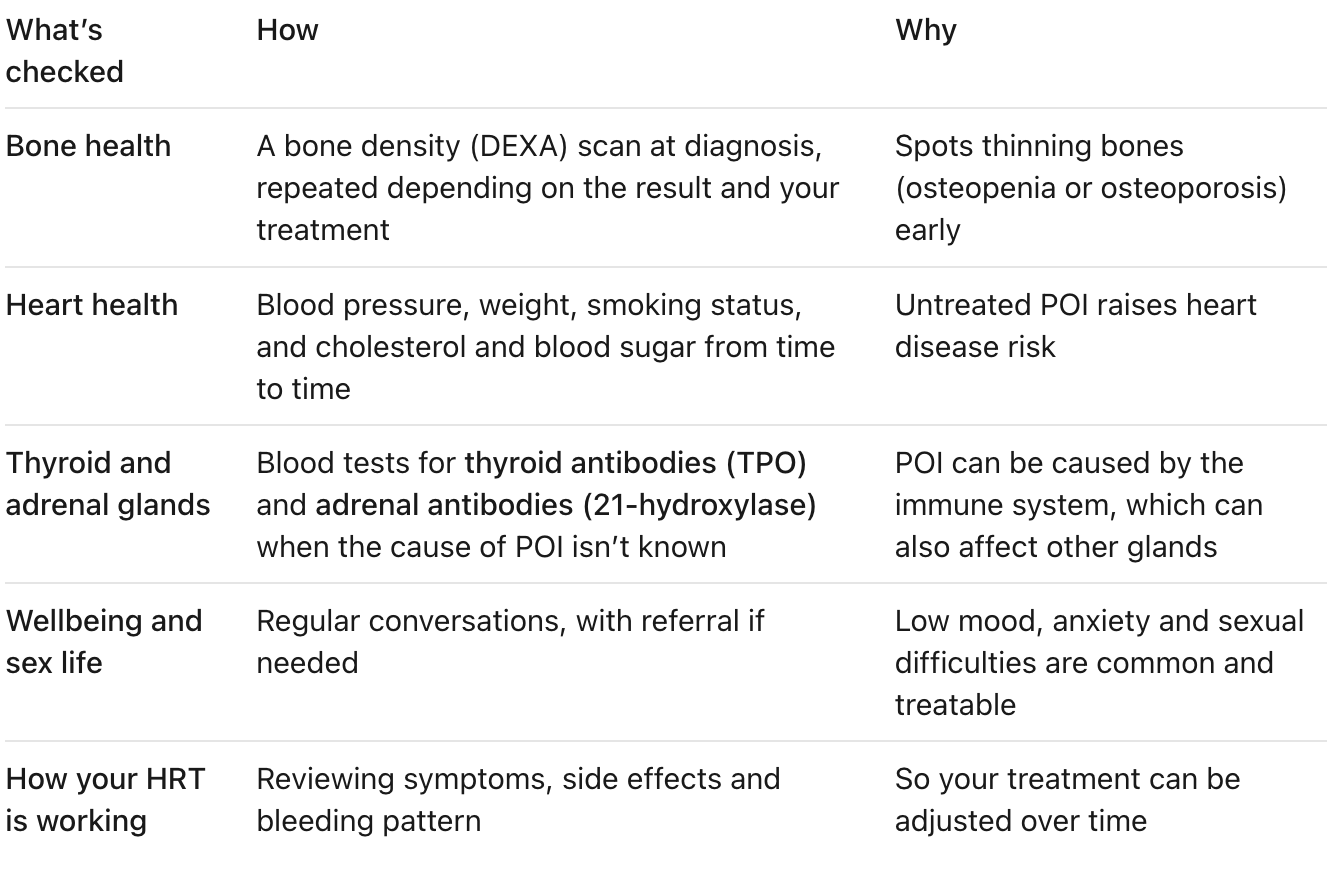
POI is a long-term condition, so regular follow-up matters, ideally with a doctor or clinic experienced in POI. The table shows what’s usually checked and why.
About the antibody tests:
If thyroid antibodies are found, you should have a thyroid blood test (TSH) every year.
If adrenal antibodies are found, you should be referred to a hormone specialist (endocrinologist). Untreated adrenal problems can be serious.
Women with Turner syndrome also need regular heart checks and specialist care.
Key messages
HRT is recommended for almost all women with POI until about age 51. It replaces what your body is missing.
Oestradiol is the preferred oestrogen. If you have a womb, add a progestogen.
Testosterone may help low sexual desire. Evidence for other benefits is still limited.
HRT is not contraception, but natural pregnancy is rare.
Lifestyle, emotional support and regular check-ups are all part of good care.
This information is for general education and does not replace personalised medical advice. Please talk to your doctor about what’s right for you.
Source: ESHRE Guideline Group on POI. Evidence-based guideline: premature ovarian insufficiency (2024 update). Human Reproduction Open, 2024.