Turner syndrome and POI: what you need to know
What is Turner syndrome?
Turner syndrome is a genetic condition that affects about 1 in 2,000 to 2,500 girls and women.
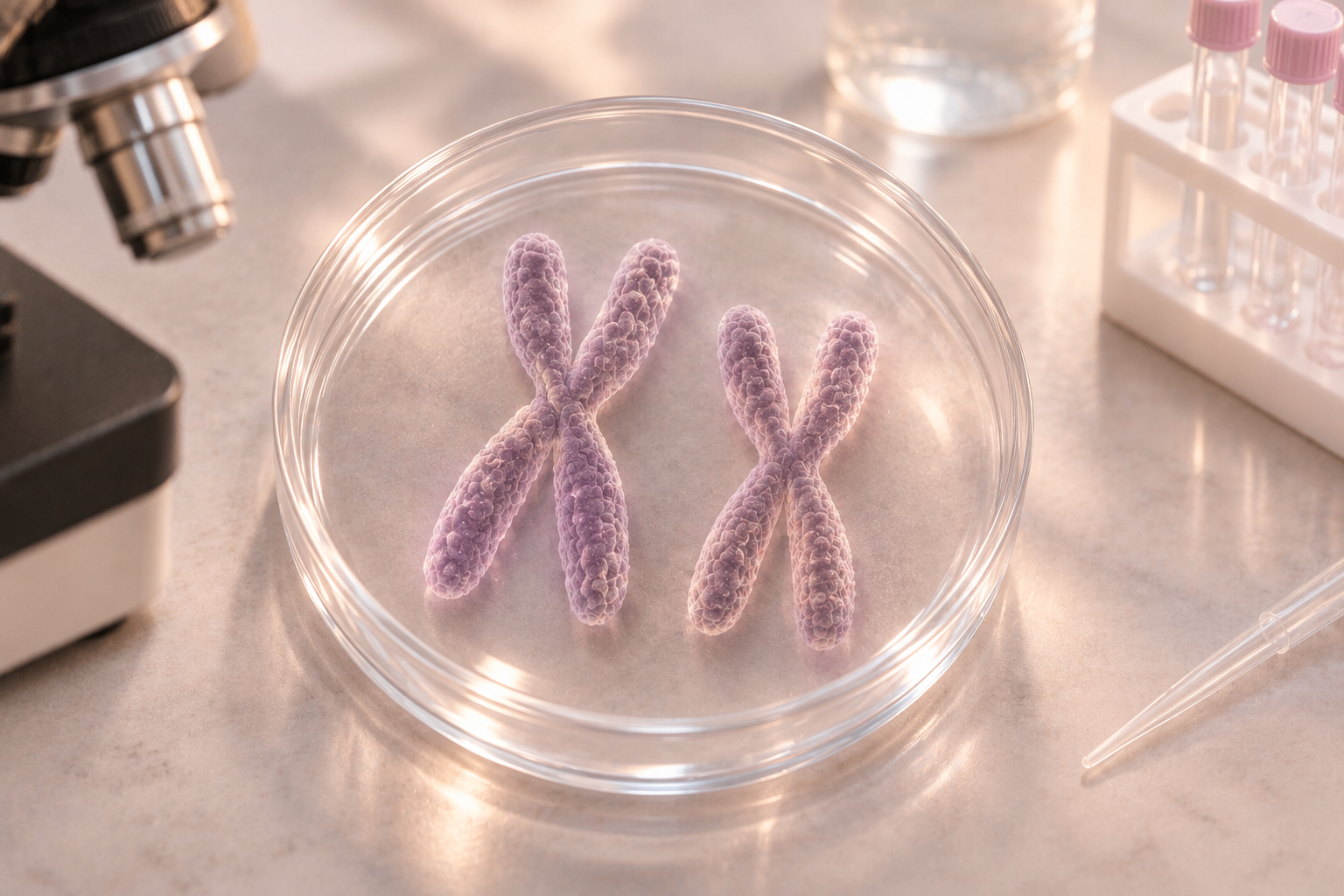
Most females have two X chromosomes in every cell. In Turner syndrome, one X chromosome is missing, or part of it is missing or changed. Chromosomes are the packages of DNA that carry our genetic instructions.
It happens by chance when the egg or sperm forms, or very early in pregnancy. It is not caused by anything the parents did, and it usually isn’t inherited.
Different types of Turner syndrome
Classic Turner syndrome (45,X): one X chromosome is missing from every cell.
Mosaic Turner syndrome: some cells have two X chromosomes and some have one. Women with mosaic Turner syndrome often have milder features and are more likely to have some ovarian function.
Structural changes: both X chromosomes are present, but part of one is missing or rearranged.
Rarely, some Y chromosome material is found. If so, specialists usually advise removing the ovaries, because there’s a higher risk of a type of ovarian tumour.
Common features
Turner syndrome varies a lot. Some girls are diagnosed at birth or before, while others aren’t diagnosed until adulthood, sometimes only when tests are done for POI. Features can include:
Short stature. Girls often grow more slowly than their friends and don’t have a normal growth spurt.
Ovarian insufficiency. The ovaries stop working early or don’t develop properly.
Heart differences, such as a bicuspid aortic valve (a heart valve with two flaps instead of three) or narrowing of the aorta (the main blood vessel from the heart).
Kidney differences, which often cause no problems.
Thyroid problems, especially an underactive thyroid.
Hearing problems and frequent ear infections.
Physical features in some girls, such as puffy hands and feet at birth, a wide or “webbed” neck, a low hairline at the back, or a broad chest.
Learning differences. Most girls have normal intelligence, but some find maths, spatial skills, attention or social situations harder.
How are Turner syndrome and POI linked?
In Turner syndrome, the ovaries usually lose their eggs much faster than normal, often before birth or during childhood. This means most girls and women with Turner syndrome have POI, often from a very young age.
More than 9 in 10 women with Turner syndrome develop POI.
About 1 in 3 girls start puberty naturally. This is more common with mosaic Turner syndrome.
Fewer go on to have regular periods, and most of those who do will find their periods stop early.
Natural pregnancy is rare, happening in around 2–7% of women, mostly those with mosaic Turner syndrome.
Turner syndrome is one of the most common known causes of POI. That’s why every woman diagnosed with POI is offered a chromosome test (karyotype).
Why does it matter?
Oestrogen is vital for:
Puberty: breast development, the growth spurt and periods.
Bone strength.
Heart and blood vessel health.
Brain health, mood and wellbeing.
Vaginal and bladder health.
Women with Turner syndrome already have a higher risk of heart disease, high blood pressure and thin bones, and losing oestrogen early raises these risks further. That’s why hormone replacement is an essential part of care.
Treatment and support
1. Hormone treatment
Inducing puberty:
If puberty doesn’t start naturally, it’s usually started with a low dose of oestrogen at around age 11–12.
The dose is increased slowly over 2–3 years, which copies natural puberty and helps growth and breast development.
A progestogen is added later, usually after about 2 years or when bleeding starts. It protects the womb lining and brings on periods.
Adult HRT:
Continued at least until the average age of menopause, around 51.
Protects bones, heart, brain and sexual health.
Uses oestradiol as tablets, patches, gel or spray, plus a progestogen.
Young women often need higher doses than women at the usual age of menopause.
Growth hormone:
Often given in childhood to help girls grow taller. It works best when started early.
2. Fertility options
Many women with Turner syndrome can become mothers, but planning is important.
Egg donation with IVF:
This is the most common and reliable way for women with Turner syndrome to get pregnant.
Most clinics recommend transferring only one embryo, because twin pregnancies carry extra risk.
Fertility preservation:
Girls and young women who still have some ovarian function, often those with mosaic Turner syndrome, may be offered egg freezing.
Ovarian tissue freezing in younger girls is still experimental for Turner syndrome, and the chance of success is uncertain.
These options are best discussed early, with a specialist team.
Natural pregnancy:
This is possible but uncommon. There’s a higher chance of miscarriage and of the baby having a chromosome difference, so genetic counselling and testing during pregnancy are recommended.
Other paths to a family:
Adoption, fostering and surrogacy are other routes to parenthood.
Pregnancy safety: why heart checks come first
Pregnancy puts extra strain on the heart and aorta. In women with Turner syndrome, there’s a small but serious risk of the aorta tearing (aortic dissection), as well as a higher risk of high blood pressure and pre-eclampsia.
Before trying to get pregnant by any route, every woman with Turner syndrome should have:
A heart assessment, including a scan (usually an MRI or echocardiogram) to measure the aorta.
A review by a cardiologist and a team experienced in Turner syndrome pregnancies.
Some women will be advised that pregnancy isn’t safe for them. During pregnancy, close monitoring by a specialist team is essential.
3. Monitoring overall health
Women with Turner syndrome need lifelong specialist follow-up. Check-ups usually include:
Moving from children’s to adult services is a key time. Some young women lose touch with care during this move, so make sure you have a named adult clinic to go to.
Emotional impact
Living with Turner syndrome and POI can be emotionally challenging:
Diagnosis may come in childhood, the teenage years or adulthood, and each stage brings different challenges.
Learning about fertility and hormone treatment at a young age can feel overwhelming.
Some girls and women struggle with body image, height, confidence or friendships.
Grief about fertility can come up at different stages of life, not just at diagnosis.
Support helps. Families, specialist clinics, psychologists and peer support groups can all make a real difference. These include the Turner Syndrome Support Society (TSSS) in the UK, the Daisy Network and My Life on Pause.
Key messages
Turner syndrome is a genetic condition caused by a missing or changed X chromosome. It affects about 1 in 2,000–2,500 females.
Most women with Turner syndrome develop POI, often at a young age.
Hormone treatment is essential, first to start puberty and then as HRT until around 51.
Egg donation is the most common route to pregnancy, but heart checks must come first to make sure pregnancy is safe.
Lifelong specialist care helps women with Turner syndrome stay healthy.
With the right care and support, women with Turner syndrome can lead healthy, full lives.
This information is for general education and does not replace personalised medical advice. Please talk to your specialist team about your own situation.
Sources: Gravholt CH et al. Clinical practice guidelines for the care of girls and women with Turner syndrome. European Journal of Endocrinology, 2024. ESHRE Guideline Group on POI. Evidence-based guideline: premature ovarian insufficiency (2024 update). Human Reproduction Open, 2024.