Genitourinary syndrome of menopause (GSM)
What is GSM?
Genitourinary syndrome of menopause (GSM) is the medical name for a group of vaginal, vulval, urinary and sexual symptoms caused by low oestrogen. It can happen after natural menopause, after surgery to remove the ovaries, or in POI.
The vulva is the outer genital area. GSM can affect the vulva, the vagina, the bladder, the urethra (the tube you pass urine through) and the pelvic floor.
The term was introduced in 2014. It replaced older names like “vaginal atrophy” and “atrophic vaginitis”, which only described the vagina and sounded negative or unclear to many women.
GSM is very common, it’s not your fault, and it’s very treatable. Unlike hot flushes, which often settle with time, GSM symptoms usually don’t go away on their own. Without treatment they tend to get gradually worse, so it’s worth asking for help early.
Why does it happen?
The tissues of the vulva, vagina, bladder and urethra have many oestrogen receptors, tiny “docking points” that respond to oestrogen. That makes them very sensitive to low oestrogen.
The role of each hormone
Oestrogen is the main hormone involved. It:
Keeps the vaginal lining thick, stretchy and moist.
Increases blood flow, which helps natural lubrication and arousal.
Feeds the “good” vaginal bacteria (lactobacilli). These bacteria keep the vagina slightly acidic, which protects against infections.
Keeps the lining of the urethra and bladder healthy, which helps prevent urgency, frequency and urine infections.
When oestrogen is low, these tissues become thinner, drier, more fragile and less stretchy. The vagina also becomes less acidic, and infections become more likely.
Testosterone plays a smaller part. It contributes to sexual desire and arousal, and may affect how sensitive the genital tissues are.
Progesterone plays little direct role in GSM. It matters mainly because women who still have a womb need it alongside oestrogen in HRT, to protect the womb lining.
Why GSM matters in POI
Women with POI have low oestrogen much earlier in life, which means:
GSM symptoms can start at a younger age, sometimes in your 20s or 30s.
Symptoms may last longer over a lifetime if they’re not treated.
It can affect sex, relationships, body image and confidence at a stage of life when many friends aren’t going through anything similar.
It can add to the emotional strain of a POI diagnosis and fertility worries.
Many women find these symptoms embarrassing to talk about, so GSM often goes unrecognised and untreated. You don’t have to put up with it. Health professionals are used to these conversations.
Symptoms
You may have some or all of these symptoms.
Vaginal and vulval:
Dryness, burning, itching or soreness.
Tissues that feel thin or fragile and may tear or bleed easily, for example after sex.
Feeling tight or less stretchy.
Discomfort when sitting, wearing tight clothing, exercising or having a smear test.
Urinary:
Needing to pass urine more often or urgently.
Getting up at night to pass urine.
Repeated urine infections.
Leaking urine when you cough, sneeze or exercise, or when you can’t get to the toilet in time.
Sexual:
Pain during sex (the medical term is dyspareunia).
Less natural lubrication.
Reduced arousal or difficulty reaching orgasm.
Lower sex drive. This can be caused partly by hormones, and partly by expecting sex to hurt.
See your doctor promptly if you have bleeding after sex or between periods, a new lump or sore, or symptoms that don’t improve with treatment. These symptoms can have other causes, like infections or skin conditions such as lichen sclerosus, which need checking.
Treatment options
Treatments can be combined, and many women use more than one.
1. Everyday self-care and non-hormonal options
Vaginal moisturisers:
Used regularly, for example 2–3 times a week, whether or not you’re having sex.
They help keep the tissues hydrated over time. Products containing hyaluronic acid are often helpful.
Lubricants:
Used during sex to reduce friction and discomfort.
Water-based and silicone-based lubricants are widely available.
Oil-based products can damage latex condoms, so avoid them if you use condoms.
If you’re sensitive, choose products made to be gentle on vaginal tissue. Look for pH-balanced, low-osmolality products, or ask your pharmacist.
Avoiding irritants:
Use plain water or a gentle, unperfumed emollient to wash the vulva.
Avoid perfumed soaps, bubble baths, wipes, douches and vaginal deodorants.
Wear cotton underwear and avoid very tight clothing if it causes discomfort.
Pelvic floor physiotherapy:
A specialist women’s health physiotherapist can help with leaking urine, pelvic pain and painful sex.
Vaginal dilators, smooth tubes in gradually increasing sizes, can help gently stretch the tissues and ease discomfort over time.
Psychosexual support:
Talking to a psychosexual therapist, on your own or with a partner, can help if sex has become painful, anxious or difficult to talk about.
2. Vaginal (local) oestrogen
This is the most effective treatment for GSM.
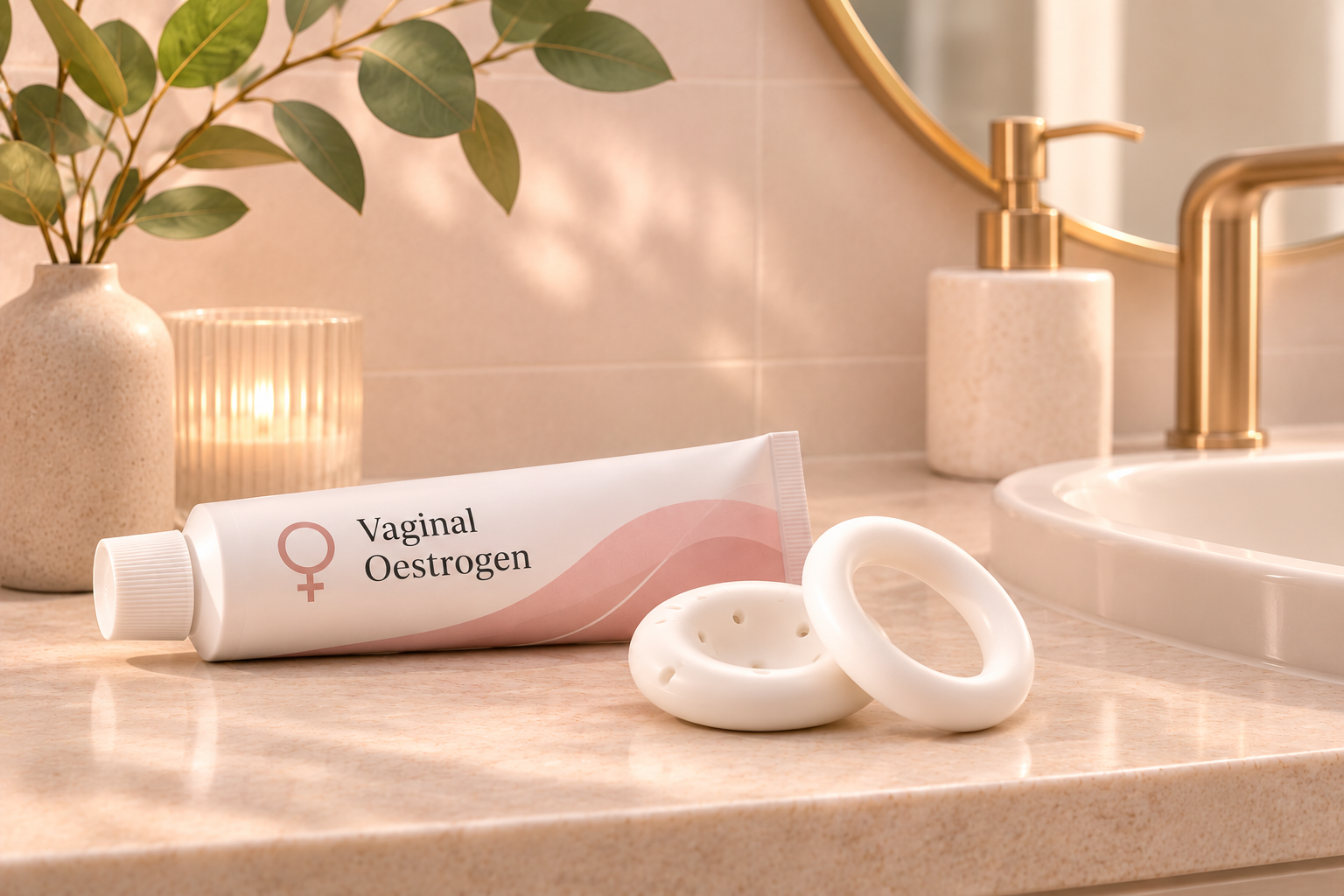
It comes as a cream, gel, pessary, small vaginal tablet or a soft ring that stays in place for 3 months.
It works directly on the tissues and only a very small amount reaches the bloodstream.
It’s considered safe for long-term use, and you don’t need to take progestogen alongside it.
It also helps prevent repeat urine infections and can ease urgency.
It can take a few weeks to work, and symptoms usually come back if you stop, so it’s often used long term.
It can be used together with HRT.
3. Systemic HRT
HRT is recommended for almost all women with POI until around 51, to protect bones, heart and brain health.
It often improves GSM symptoms too. It includes oestrogen, plus progestogen if you still have your womb.
Some women still have vaginal or urinary symptoms even on HRT. If so, adding vaginal oestrogen is safe and common.
4. Other prescription options
These may be considered if vaginal oestrogen isn’t suitable or doesn’t help. They have been studied mainly in women after natural menopause, so there’s less evidence for women with POI.
Ospemifene is a daily tablet. It acts like oestrogen on the vaginal tissues without being oestrogen itself.
Prasterone (vaginal DHEA) is a small pessary used nightly. The body turns it into oestrogen and testosterone inside the vaginal tissue.
What about vaginal laser treatments?
Some private clinics offer laser or “vaginal rejuvenation” treatments for GSM. There isn’t yet enough good-quality evidence that these work or are safe in the long term. UK and international experts advise they should only be used within clinical research.
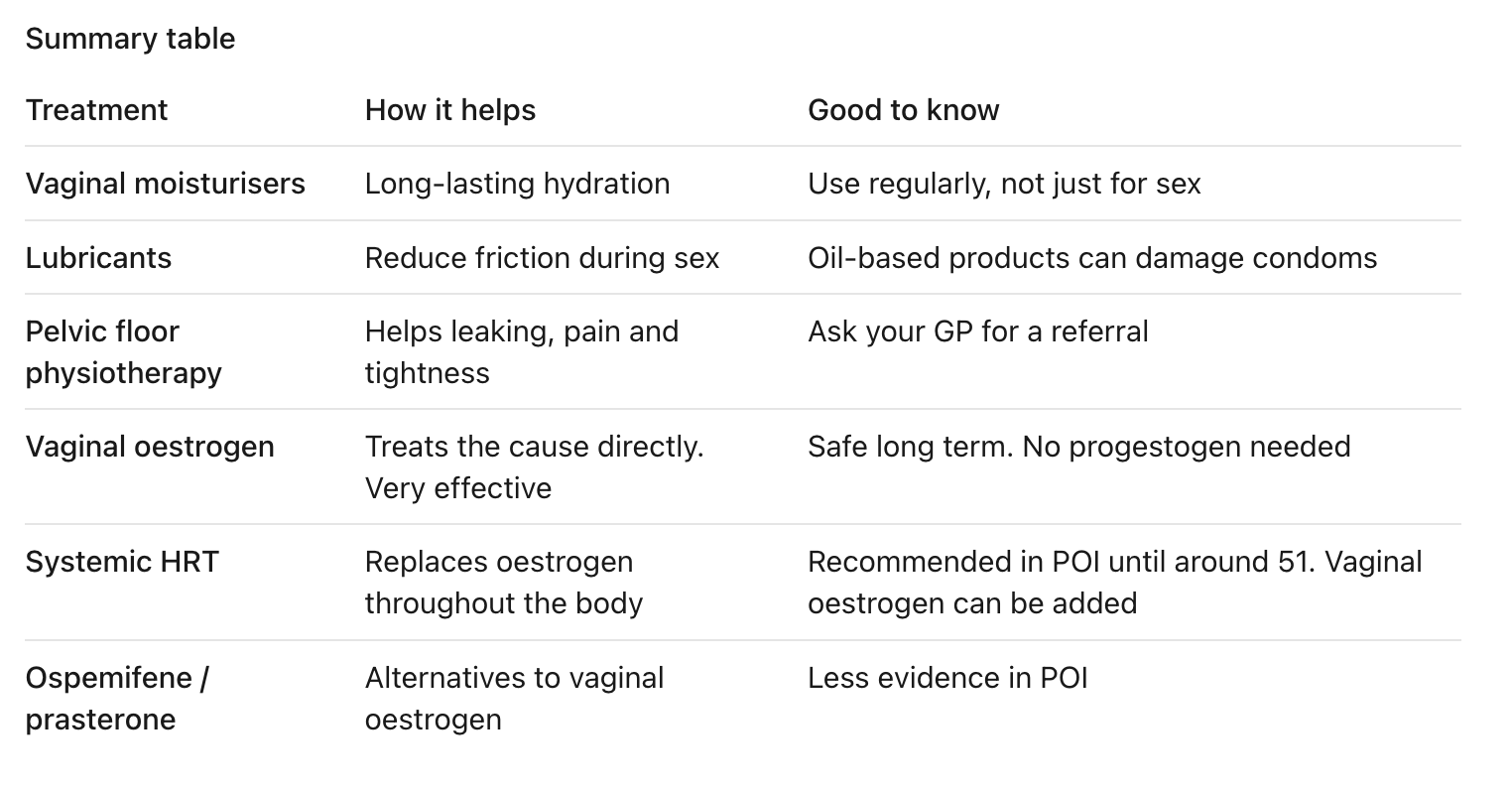
Summary table
Key messages
GSM is caused by low oestrogen and affects the vagina, vulva, bladder and sexual health.
In POI, it can start much younger and may last longer if it isn’t treated.
It usually doesn’t get better on its own, but it’s very treatable.
Vaginal oestrogen is safe, effective and can be used alongside HRT.
Moisturisers, lubricants, physiotherapy and psychosexual support can all help.
You don’t need to suffer in silence. These symptoms are common, and doctors are used to talking about them.
This information is for general education and does not replace personalised medical advice. Please talk to your doctor, practice nurse or pharmacist about which options are right for you.
Sources: ESHRE Guideline Group on POI, Evidence-based guideline: premature ovarian insufficiency (2024 update); Portman & Gass, Genitourinary syndrome of menopause: new terminology, Menopause, 2014; British Menopause Society guidance on vaginal and urogenital health.